Newsrooms today have changed significantly in the span of just a decade. Advanced technology is now an integral part of reporting, publishing, and disseminating information in the modern newsroom.
For students looking for a mass media college in Ghaziabad, it is important to find a college that helps them learn AI skills side-by-side in their journalism or mass media course. Those who gain proficiency early on in related fields like AI (artificial intelligence) will find themselves in demand. Let's discuss how AI is transforming journalism and the skills required for the future journalist.
Journalists are already using AI tools for transcribing interviews and research documents. Some advanced tools can perform this task in a matter of minutes.
Reports that use specific data sets (such as weather forecasts or financial reports) can employ AI to automate parts of the reporting process. This reduces the menial work required for report writing. Journalists can then focus on adding value through research and commentary.
Images and videos that have been altered are becoming a common feature on digital platforms. AI tools can be used to fact-check and identify doctored material. In addition, tools can also be used to verify the source of a particular report or video.
The word 'with care' is important in this context. AI tools should be thought of as an aid to reporting rather than the main activity.
Like any other technology, these tools can have inherent flaws. One needs to remember that AI systems can carry biases as well.
It is important to keep in mind that one does not need to have a vast array of tools to get started. One can always begin with a step-by-step approach.
It is important to start small but think big. One should always begin with one tool, choosing one that can automate a repetitive task, such as transcription. It is important to remember that there should always be a human touch to any piece of reporting.
Always verify facts, names, and other relevant pieces of information before publishing. It is important to always include a disclaimer whenever AI tools are used in the making of a report.
Make sure to use good prompts. One should remember that good prompts yield good results. It is important to be precise and clear while using such prompts.
Make sure to update one's skills regularly. Such tools are constantly evolving, and one should update their skills at least once a year.
The future newsroom of 2027 will demand much more than just writing skills. Here are the most in-demand skills that one should focus on:
It is important to remember that traditional skills such as good writing will always be in demand. One can always learn new skills while being proficient in traditional areas.
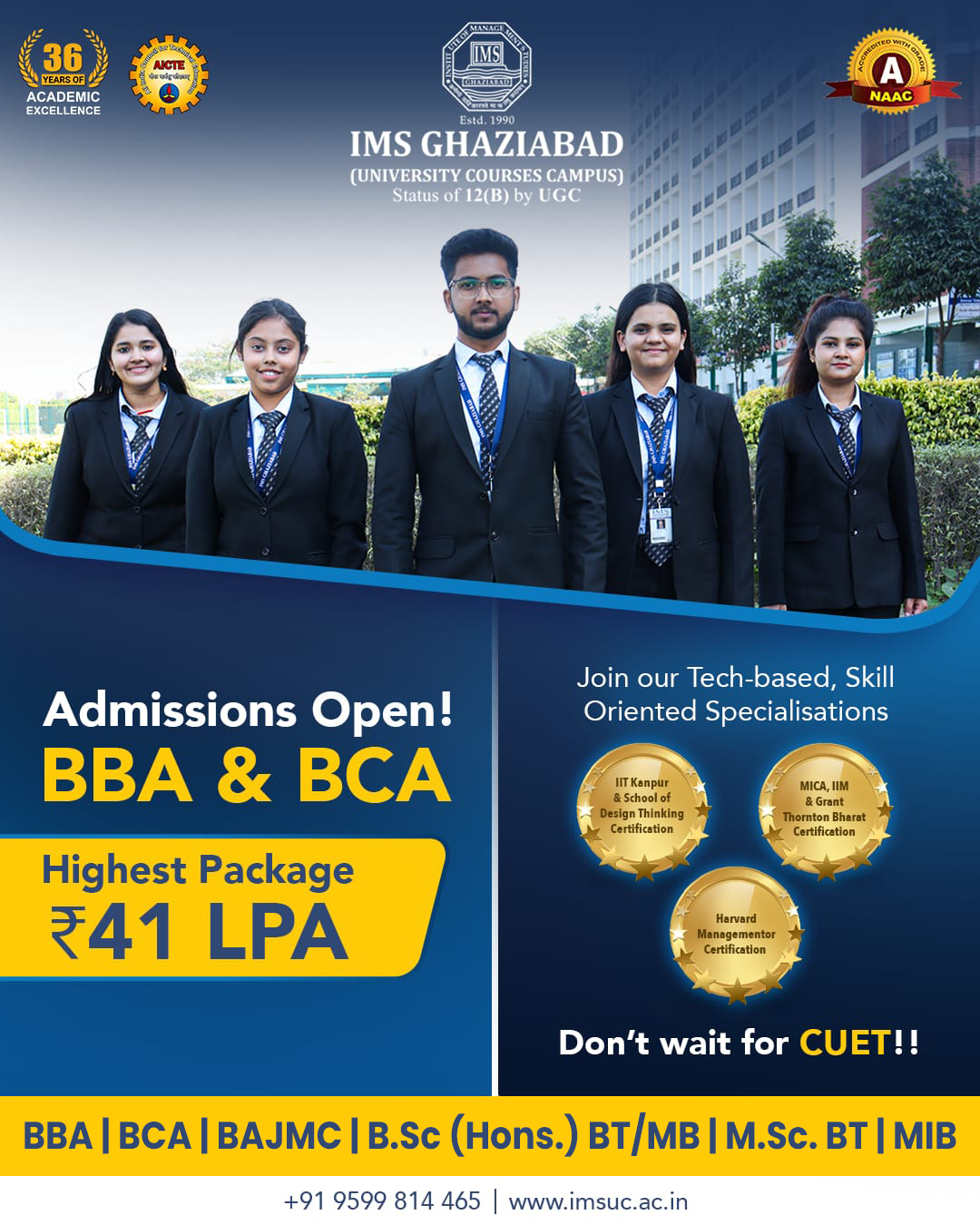
IMS Ghaziabad (University Courses Campus) is a journalism mass media college in Delhi that offers a 3-year BAJMC course that prepares one for a career in journalism. The course has been specifically designed to prepare students for the constantly evolving media landscape.
Students can choose an optional specialisation in AI-powered Journalism. In addition, one can also choose from the following specialisations:
This allows one to combine their interest in AI with another field of their choice.
The core curriculum lays a solid foundation in Digital Journalism, New Media Technology, and Content Production for New Media.
The course ensures that students do not only learn theory. The school features a media studio that helps one learn the ropes of video and audio editing, among other things. In addition, students can gain first-hand experience by taking up internships.
The campus also features workshops and guest lectures by industry experts. In addition, students can get a sense of the inner workings of media houses by taking up industrial visits.
AI is set to change journalism for the years to come. The future journalist will need to combine their reporting skills with technological know-how. Such people will also need to be ethically conscious to avoid the pitfalls that come with such technology.
To prepare for this future, it is important to enrol in a good course. IMS UCC's BAJMC programme is well equipped to provide students with the relevant skill set. It is one of the best mass media colleges in Ghaziabad to opt for.